
Covington Directory Collections by Year
The Kenton County Public Library genealogy collection is the main local shelf. Its listed Covington, Newport, and vicinity coverage includes 1834, 1839-40, and 1856 to the present, divided among print, microfilm, and database access. Ancestry Library Edition provides digitized city directories on library computers. Check the exact edition and format before a visit because availability can change.
| Collection | Years | Where Held | Access |
|---|---|---|---|
| Covington/Newport directories | 1834; 1839-40 | Kenton Library | Print or microfilm |
| Covington city directories | 1856-present | Kenton Library | Print, microfilm, in-library database |
| Reverse street guide | 1931-32 | Kenton Library | Street and householder order |
| Sanborn maps | 1867-1970 | Library and map collections | Block and building context |
| City minutes and ordinances | 1837-1993, by series | Library microfilm | On-site research |
The library genealogy page shows the local-history department used for this directory search.

The captured page helps confirm the department and access route before asking for a volume or frame.
Decode a Covington Directory Listing
Copy a listing as printed. Record the edition, year, page or microfilm frame, exact name and initials, spouse or household wording, address, and role marker. An occupation or business label describes only that edition. The volume's key controls the meaning of short forms.
| Name | Exact spelling, initials, spouse, and household wording |
|---|---|
| Role | Occupation, business, institution, or other printed relationship |
| Address | Number, street spelling, suffix, ward, or neighborhood |
| Reverse entry | Street, number, and named householder |
| Citation | Edition, page or frame, collection, and format |
- Criss-cross directory
- A section arranged by street and house number instead of surname.
- Householder index
- An address-order list naming the person or institution printed for each place.
- Abbreviation key
- The publisher's list explaining symbols and shortened words.
The library city-directory article explains alphabetical and reverse use.
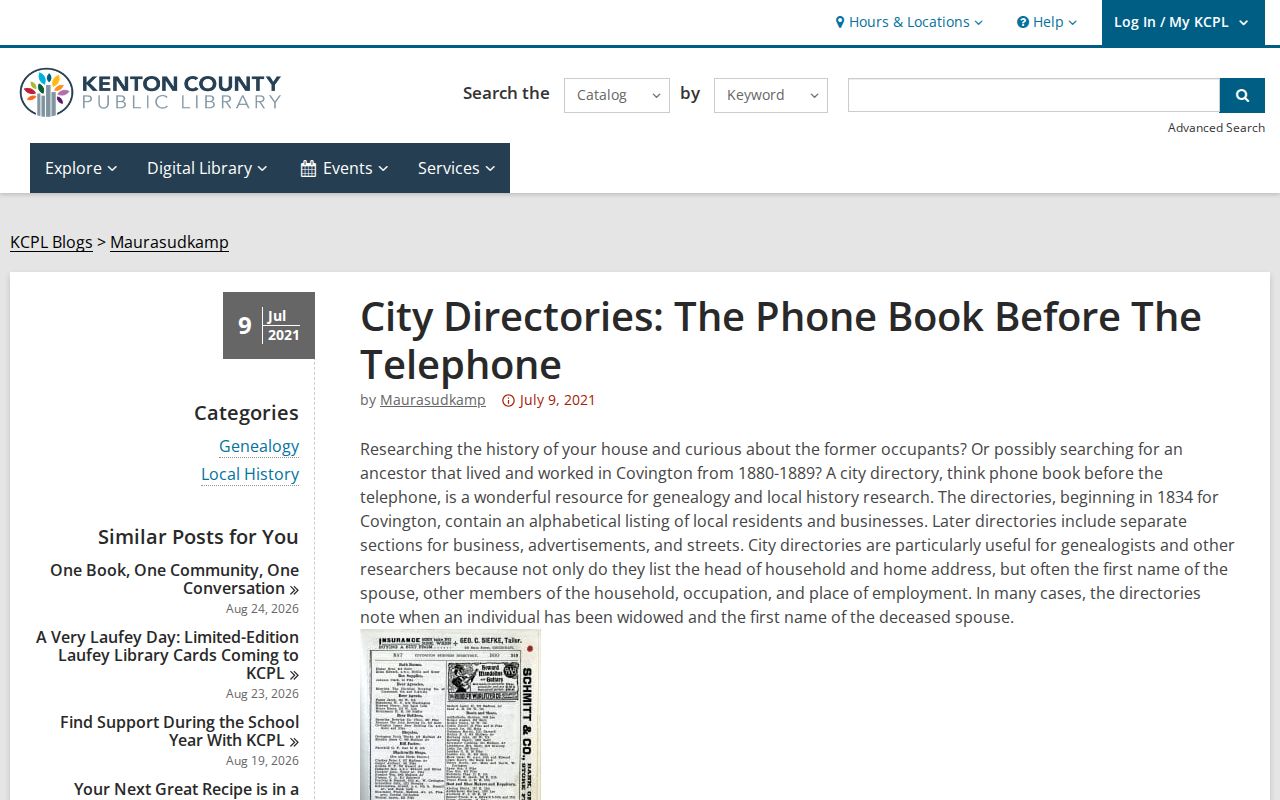
This distinction lets an unknown name be found from a known Covington street number.
Covington's 1931-32 Address Index
The 1931-32 reverse street and householder guide is the standout address-first tool in the local run. First normalize the old number and street spelling with an atlas or Sanborn map. Check the street-order page, copy the name exactly, and turn to the alphabetical section. A vacant lot, institution, business, boarder, or changed number can explain why an expected surname is missing.
This city directory method is strongest when paired with a source made for another purpose. A deed documents a transfer. A newspaper documents an event. Neither automatically proves the same relationship as the directory. Keep the year and source role beside every fact.
Note: Publication lag, moves, enumeration choices, and street renumbering can make nearby editions disagree without either one being a simple error.
Covington Directory Help at Scott Boulevard
The Covington Branch at 502 Scott Boulevard holds the History and Genealogy department. Research lists 859-962-4070 and history@kentonlibrary.org. Hours observed were Monday through Wednesday 9 to 5, Thursday 9 to 9, Friday 9 to 5, Saturday 10 to 5, and Sunday 1 to 5. Confirm hours before travel.
Staff can help locate directories, newspapers, maps, photographs, family files, and microfilm. The research and photograph request route is a fallback. The posted process describes work around $5 to $20 or more, up to ten items, a 30-day allowance, full names and dates, and nonrefundable payment. Ask for an edition, year, page, or collection, not broad family research.
The Covington community-history collection supplies place names and civic context.
These terms help match old street, parish, school, and neighborhood references without modernizing them too soon.
Trace Covington Families Across Directories
Annual volumes fill years between federal census schedules. Work one edition at a time and build a dated ledger. A person who vanishes may have moved, died, changed name, been omitted, or entered under initials. Another source should support the explanation.
- Find the earliest likely name spelling and copy the full city directory citation.
- Move forward year by year, noting address, spouse, and role changes.
- Check the reverse section for the address and nearby householders.
- Pair directory years with census, deed, newspaper, church, cemetery, and vital dates.
- Close gaps with an obituary index or focused archive request.
The Diocese of Covington Archives offers appointment-based genealogy access to early sacramental material through 1930. Later records are restricted, and certificates may need signed authorization.
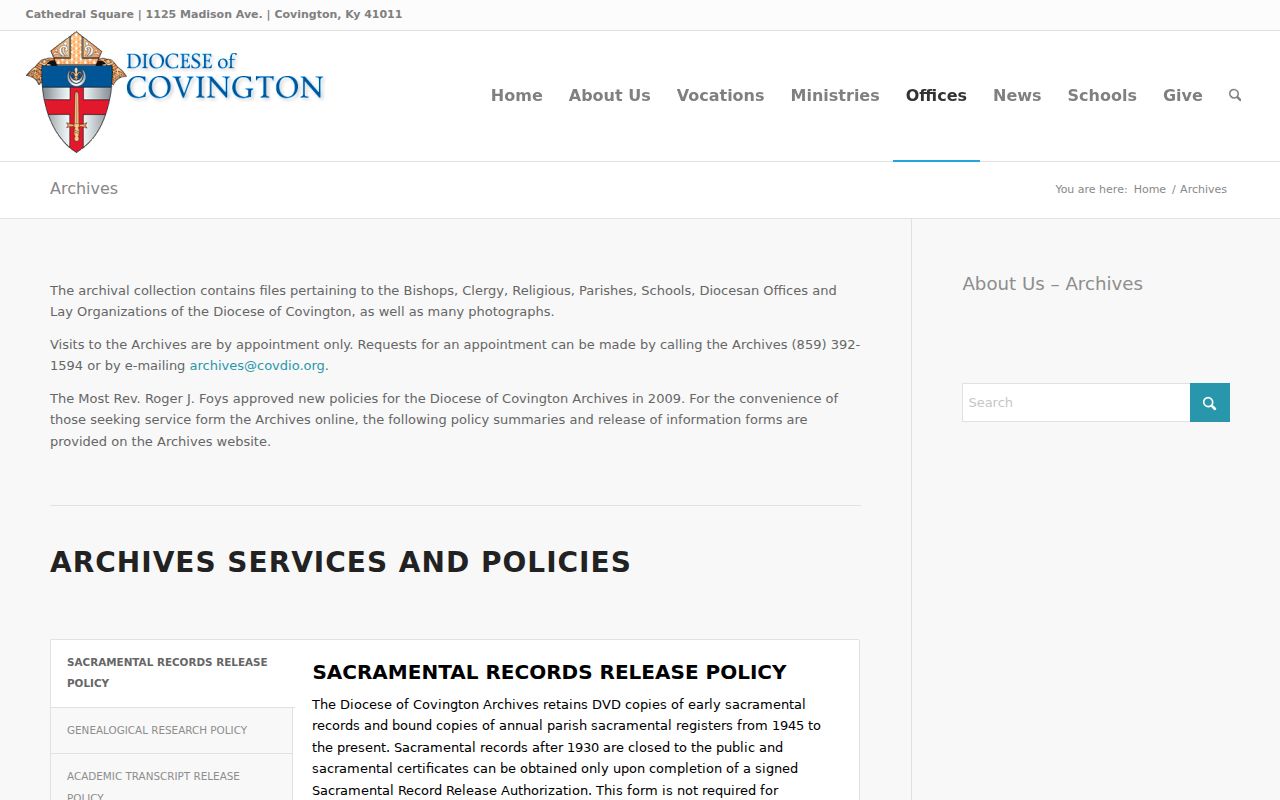
Parish material may confirm an event or relationship, but pair it with a dated address source before tying it to a household.
Covington Directory Dates in Context
Civic dates explain labels printed in early volumes. City history distinguishes the Covington Company in 1814, town incorporation in 1815, city status in 1834, Kenton County's creation in 1840, and West Covington's annexation in 1916. A directory can use a ward, city, or vicinity term that does not map neatly onto a current boundary.
| Date | Directory Research Meaning |
|---|---|
| 1815 | Early town and civic-record context |
| 1834 | City status and an early directory year |
| 1840 | Kenton County created with two seats |
| 1856 | Start of the continuing directory run |
| 1916 | West Covington annexation changes place labels |
| 1931-32 | Reverse street and householder guide |
The county history account explains why Covington and Independence both serve as county seats.
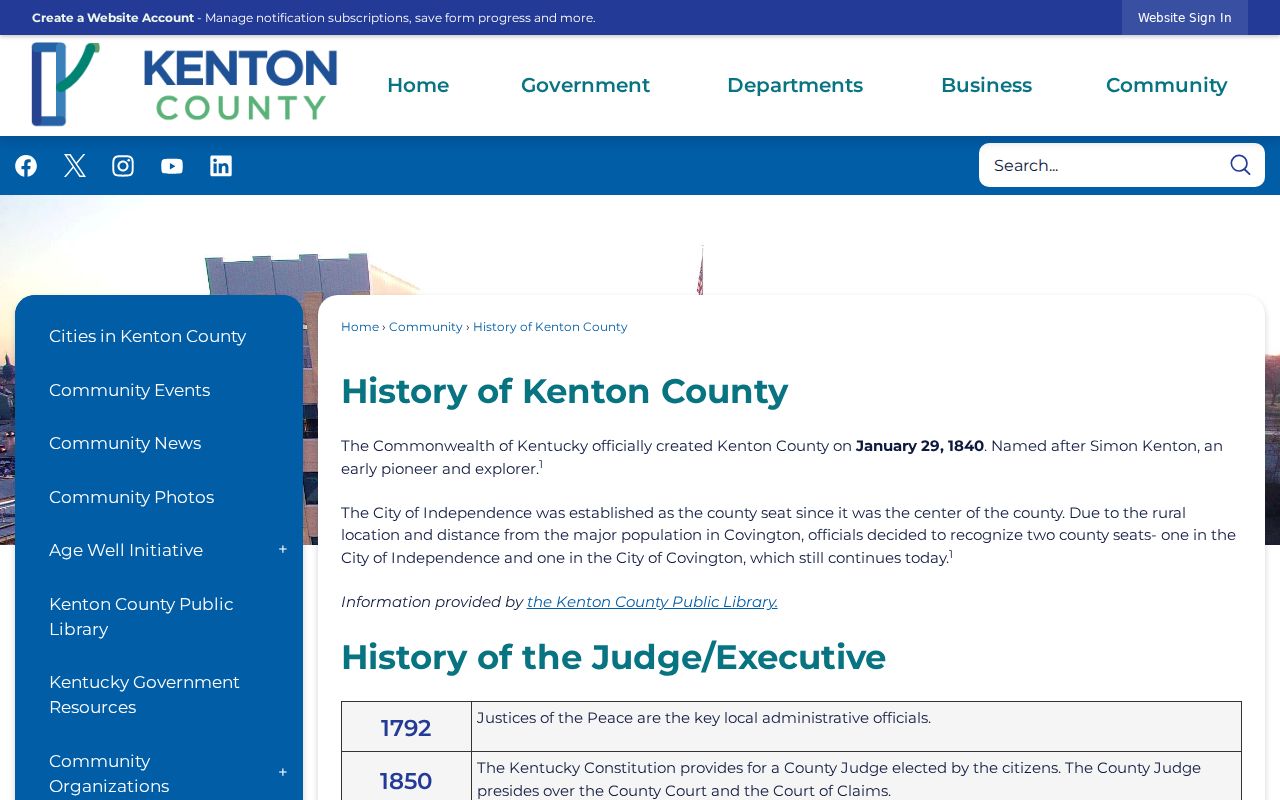
The arrangement is a practical clue. A missing county series may follow the other courthouse route.
Covington Records Beyond City Directories
The library microfilm list expands a name beyond the directory shelf. Covington series include Council minutes from 1837 to 1914, Commission minutes from 1914 to 1993, ordinances from 1887 to 1928, Board of Equalization records from 1899 to 1940, voter forms from 1936 to 1972, school census from 1915 to 1977, and a civil index from 1940 to 1977.
Special collections include Protestant Children's Home volumes from 1880 to 1943, Faces & Places, family files, coroner inquests from 1910 to 1992, newspapers, maps, and oral histories. A named collection may not be digitized. Ask about volume, box, dates, and access terms.
The Kenton County Historical Society provides another collection lead.

Its photographs, documents, publications, and library partnership can explain a terse annual listing.
Map Covington Directory Addresses
Sanborn maps cover Covington from 1867 to 1970 and show block form, structures, and historic use. The House Stories sequence adds an 1877 atlas and Sanborn years 1886, 1894, 1909, 1949, and 1954. Copy the map sheet, year, street labels, and building notation. A map gives place context, not household identity.
The river confluence, rail corridors, hills, German parishes, and districts such as MainStrasse, Mutter Gottes, Seminary Square, and Licking Riverside explain terms found in old entries. If the goal shifts to modern address records, use the Covington Street Directory rather than extending an old listing into the present.
Historical street work should also preserve the difference between a householder, an assessed owner, and a person merely named in a city action. Library Council and Commission minutes may identify a petitioner, official, contractor, or speaker. Board of Equalization material may identify an owner or assessed party. A directory entry can identify the name printed for a household or business. Place these roles in separate ledger columns, even when the name and address match, because each record was made for a different reason.
Geography can change the search route. Early streets carried names tied to Kentucky governors, later annexations added territory, and old ward labels do not always match a current neighborhood. German parish records may bridge a surname to a baptism, marriage, or burial, while the directory supplies a dated street. Confirm that the parish, directory year, and address chronology overlap before merging them. For riverfront or rail-corridor addresses, compare adjacent street names and map sheets because industrial or institutional listings may replace household entries between editions.
Note: Preserve the old street spelling and number in the citation, then record any modern crosswalk as a separate sourced finding.
Covington Directory Archive Fallbacks
Not every record remains on one shelf. The Kentucky Department for Libraries and Archives lists city registers, vital materials, census, military, judicial, wills, and deeds, with an on-site research-room route. The Kentucky Historical Society Digital Collections offers finding aids and images. Captions can lead to a person, address, or institution, but are not a full directory.
The library, KDLA, historical society, museum, County Clerk Record Room, and Diocese each preserve a different layer. Start with the exact relationship and date, then contact the likely keeper. This keeps a failed web search from becoming a false claim that no city directory record exists.
A precise archive request should name the person as printed, every known spelling, the Covington street or parish, a narrow year span, and the collection already checked. Ask the keeper to return the collection title, volume or box, page or frame, and any access restriction with the answer. Save a clear copy of the abbreviation key when a city directory page is supplied. If the answer cites only an index, request the image or underlying item separately when access allows. This small record ledger makes later comparisons reproducible and prevents a citation from losing its year or source role.
Historical photographs and postcards need the same care. A caption can date a storefront, institution, street view, or named subject, yet it may use a later description or an informal neighborhood name. Compare the caption date with a directory edition and a map from the same period. Cemetery, obituary, and church records can anchor a death, service, or family tie, but none should be stretched into proof that a person stayed at one address for every year between listings.
For present-day verification after a historical find, the Covington resident lookup explains how official indexes describe current roles without acting as one universal roll.