
Covington Previous-Resident Sources
No single record supplies a full household history. Kenton PVA provides the present parcel and a deed pointer. The County Clerk records transfers and interests, while the library's directories offer dated householder listings. Sanborn maps show building form and use, not occupants. Census, obituary, church, cemetery, newspaper, and probate sources can confirm relationships and moves. The best account of previous residents names what each source actually proves.
| Source | Years It Covers | Where Held | What It Shows |
|---|---|---|---|
| Kenton PVA parcel | Current assessment vintage | Public property search | PIDN, owner string, address, deed pointer |
| County Clerk deeds | Online series vary; older record-room holdings | Paid portal or Record Room | Grantor, grantee, instrument, book/page, date |
| Covington directories | 1834, 1839-40, and 1856-present holdings | Kenton Library | Printed address and adult or householder listing |
| Sanborn maps | 1867-1970 | Library or Library of Congress | Building footprint, material, and historic use |
| City records | Series-specific civic runs | City Clerk and library microfilm | Permit, ordinance, assessment, or public role |
Start with the newest reliable parcel, then move backward one dated link at a time. A blank year is not proof that nobody lived there. An edition may be missing, a house may have been renumbered, or an older instrument may be available only at the record room.
Start Covington Address History
Normalize the address through USPS, then search the Kenton PVA property records. Copy the PIDN exactly, including punctuation and leading zeroes. Also save the parcel address, owner string, subdivision or lot, and deed book/page. A PIDN is the parcel identification number used to carry the same land unit between systems.
PVA is an assessment source. It does not say that the named owner occupies the home. Tax records may use an owner tied to a fixed assessment date, and a mailing address can differ from the parcel's physical address. Preserve the record date and role before moving backward.
Trace Kenton County Deeds Backward
The County Clerk owns the land instrument. Begin with the PVA deed book/page, then use the Kenton County Clerk real-estate routes. The paid online portal is one path. The public Record Room at 1840 Simon Kenton Way is the main fallback, especially for early material. The clerk does not provide book/page by phone or prepare documents for a requester.
- Record the PIDN, owner field, and deed reference from PVA.
- Open the Clerk instrument. Capture grantor, grantee, type, date, book/page, courthouse code, and prior reference.
- Treat the grantor as the next ownership lead, not automatically as a former occupant.
- Repeat one transfer at a time. Compare the legal description and PIDN.
- Mark estates, trusts, entities, family transfers, and gaps instead of turning them into household claims.
- Grantor / grantee
- The party giving an interest and the party receiving it.
- Chain of title
- The linked sequence of recorded transfers for one parcel.
- Legal description
- The formal land description that can remain stable when a street number changes.
Covington uses courthouse code C, while Independence uses I. Official Records Books begin online May 1, 1999, and other series have different dates. Earlier records may require the Record Room, microfilm, or archive.
Map Covington Houses Through Time
A local house-history chain can move from the 1877 atlas through Sanborn editions from 1886, 1894, 1909, 1949, and 1954. Maps help answer whether a structure existed, how a lot was used, and whether a house number or block pattern changed. They cannot name a resident unless a separate source does so.
The strongest sequence is map, directory, deed, then assessment or permit. If a directory address fails, locate the building on the nearest map year and test an old number or street spelling. Covington's annexation history and older streets make this crosswalk vital.
Covington's civic chronology gives useful checkpoints. The town dates to 1815, city status to 1834, Kenton County to 1840, and West Covington annexation context to 1916. These dates do not establish a household, but they help explain why a street, ward, county series, or courthouse route changes between records. Kenton County has two seats, Covington and Independence, so the same county system can use different locations and courthouse codes.
City records can bridge the years between maps and directories. Kenton Library lists Council minutes from 1837 through 1914, Commission minutes from 1914 through 1993, ordinances from 1887 through 1928, and Board of Equalization material from 1899 through 1940. A person named there may be a petitioner, official, contractor, or assessment party. Capture that role exactly. It should not become a residence claim unless a separate dated address source supports it.
Covington Reverse Directory Clues
The 1931-32 directory has a reverse street or householder guide. Begin with the street and number, then move to the alphabetical entry. Record the exact printed spelling, address, edition, page, and any householder mark. Library holdings include 1834, 1839-40, and 1856-present runs in print or microfilm, plus in-library digitized access.
A listing can lag a move, omit a boarder, or name an institution. It is dated evidence, not a current occupancy claim. The geNKY database adds local genealogy leads.
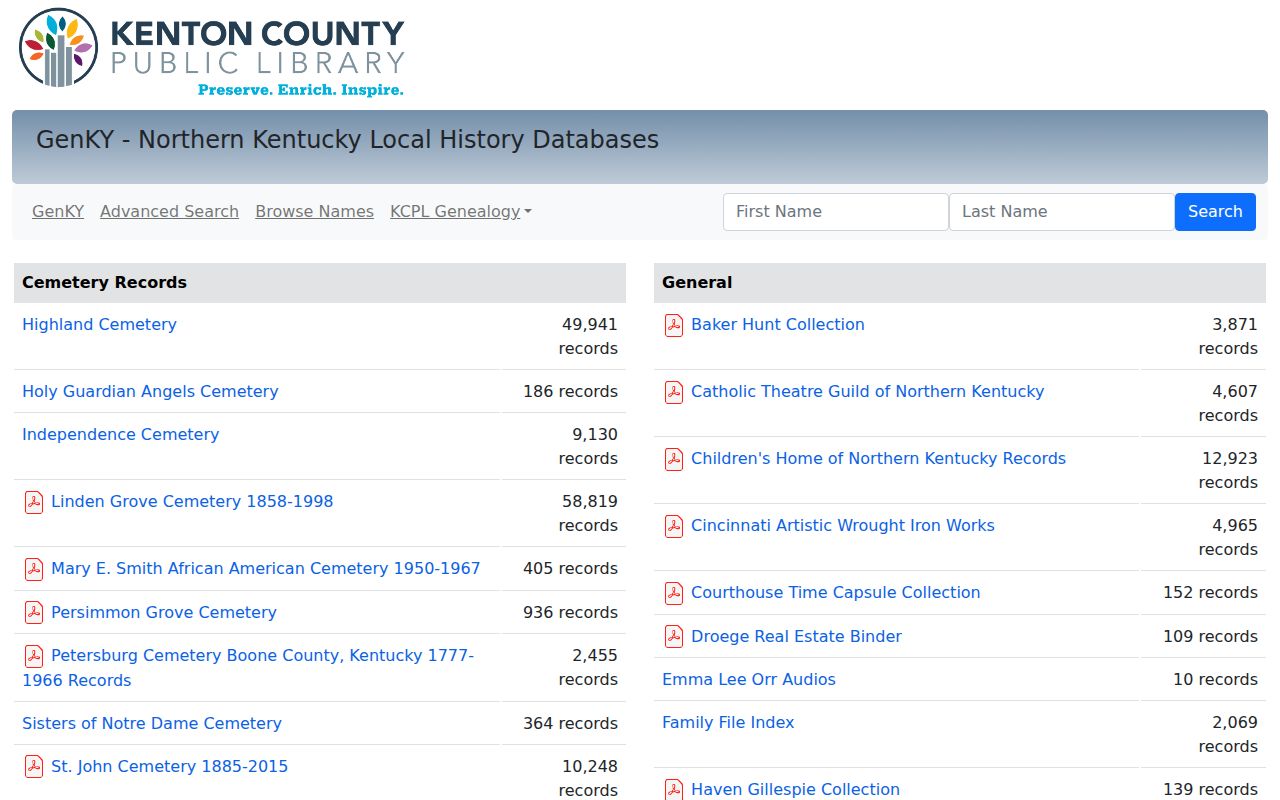
Use an index result to request or inspect the cited record rather than treating the index line as the whole file.
Covington Past Household Records
Once a deed or reverse directory supplies a name, compare editions around that date and pair them with a census year. Newspapers, obituaries, church records, cemetery files, and probate can explain relationships or a move. Each source has its own role: deed party, directory householder, census household member, or obituary subject.
- Copy the exact directory address and listed adults.
- Compare the nearest accessible census year.
- Check the next directory for a changed householder, vacancy, or number.
- Use obituary, probate, church, or cemetery records to test the transition.
The Kenton Library microfilm catalog is a major fallback for property, tax, will, cemetery, church, funeral, and association records.

The catalog helps name the right series and year before a staff request is placed.
Kenton Library's microfilm inventory gives this work several Covington-specific bridges. Council minutes run from 1837 through 1914, Commission minutes continue from 1914 through 1993, and ordinance film spans 1887 through 1928. School census material covers 1915 through 1977, while Board of Equalization records cover 1899 through 1940. These are not substitute resident lists. They can, however, explain why a surname, child, owner, appeal, street, or civic action appears between directory editions. Ask staff for the exact series and year, then cite the reel or frame returned.
Church and cemetery records can close a different kind of gap. Early Diocese of Covington sacramental records through 1930 have a genealogy route by appointment or DVD, and early parish microfilm is available at Kenton Library. Later diocesan records are restricted for public genealogy and certificates require authorization. Preserve the parish name and event date, and never turn a sacramental entry into proof of continuous residence.
Lawful use. Trace Covington previous residents for family or house history. Never use old address records to stalk, harass, or harm anyone.
Covington Previous-Resident Archives
When the library shelf or Clerk index stops, move to the custodian that owns the missing era. The City Clerk keeps minutes, ordinances, resolutions, contracts, and archival records. Kenton Library holds Council minutes from 1837-1914, Commission minutes from 1914-1993, ordinances from 1887-1928, and Board of Equalization material from 1899-1940.
The Kentucky archives research room adds Covington city registers, deeds, wills, census, marriage, judicial, military, and state records.
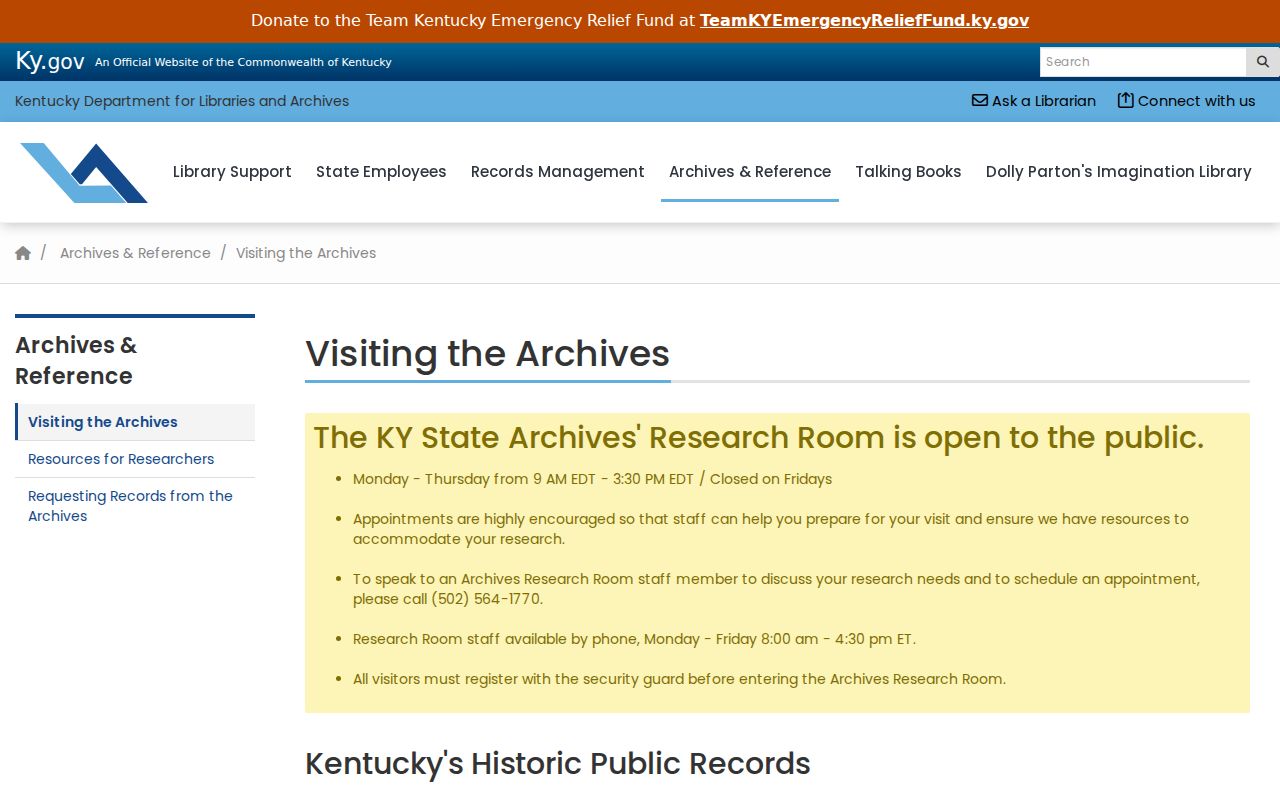
Ask for the collection, date span, volume, box, or locator number. Originals may require registration and staff retrieval.
Kenton Library accepts focused research and photograph requests when travel is not practical. The researched service notes a staff-time range of about $5 to $20 or more, a limit of ten items, and up to thirty days. Fees are nonrefundable even if nothing is found. Supply full names, dates, collection or directory year, address as printed, and any citation or image number. Verify current terms before sending payment.
Church and cemetery sources can close a historical trail. The Diocese of Covington Archives is appointment-only; early sacramental material through 1930 is open for genealogy, while later material has restrictions and certificates need authorization. Early parish microfilm is also at Kenton Library. Match parish, address, and date before linking the record to previous residents. Cemetery or obituary evidence can anchor a death or relationship, but it does not prove continuous residence.
Verify Covington Previous Residents
Keep a ledger with source title, date, address as printed, person or entity name, role, book/page or image number, and access note. Record negative searches too. A login gate, missing edition, or redaction says something about access, not whether the person existed.
Two independent records make a stronger link. A deed plus directory may connect ownership and a dated householder. A directory plus census may connect an address with a household. A Sanborn map plus permit may explain a building change. Never let one role silently replace another.
The Covington city directory collections explain the historical shelf in more depth.
A useful ledger distinguishes current parcel owner, recorded deed party, directory householder, adult listing, census household member, permit applicant, and obituary subject. It keeps exact street spelling, suffix, unit, neighborhood, ZIP, and any old number. If the legal description remains stable while the street number changes, the parcel link may survive. If both change, stop and confirm the lot, subdivision, map footprint, and adjoining parcels before joining records.